Grade 5 Vs Grade 2 Titanium Bar: What's The Difference?
Dec 10, 2025
Titanium is graded based on its purity and alloy content, which directly affects its mechanical properties and corrosion resistance. Grade 2 titanium is commercially pure, meaning it contains very few alloying elements, while Grade 5 titanium is an alloy that includes aluminum and vanadium to enhance its strength and performance. These differences influence how each grade behaves under stress, in corrosive environments, and during fabrication processes.
The classification of titanium grades helps engineers and designers select the appropriate material based on the specific demands of their projects. For instance, applications requiring excellent corrosion resistance but moderate strength often favor Grade 2, whereas those demanding high strength and fatigue resistance lean toward Grade 5.

Grade 2 Titanium: Commercially Pure
Grade 2 titanium is composed of at least 99.2% pure titanium, with trace amounts of oxygen, iron, carbon, and nitrogen. The absence of significant alloying elements means its properties are dominated by the purity of titanium itself. This high purity gives Grade 2 excellent corrosion resistance and ductility, making it highly formable and suitable for applications where these traits are critical.
The small amounts of oxygen and iron present in Grade 2 serve as interstitial elements that slightly strengthen the metal without compromising its corrosion resistance. The balance of these elements is carefully controlled to maintain the metal's excellent performance in aggressive environments.
Grade 5 Titanium: Alloyed for Strength
Grade 5 titanium, also known as Ti-6Al-4V, contains approximately 90% titanium, with 6% aluminum and 4% vanadium. These alloying elements significantly enhance the material's mechanical strength and heat resistance. Aluminum acts as a stabilizer for the alpha phase of titanium, improving strength and oxidation resistance, while vanadium stabilizes the beta phase, contributing to toughness and fatigue resistance.
The precise combination of these elements allows Grade 5 to achieve strength levels far beyond commercially pure titanium, while still retaining good corrosion resistance. The alloying also affects the metal's density slightly, making it marginally heavier than Grade 2 but with much higher load-bearing capacity.

Grade 2 titanium exhibits tensile strengths ranging from about 345 to 550 MPa, with yield strengths between 275 and 483 MPa. These values make it suitable for applications where moderate strength is sufficient, and where ductility and toughness are more critical.
In contrast, Grade 5 titanium boasts tensile strengths between 895 and 930 MPa, with yield strengths from 828 to 869 MPa. This dramatic increase in strength makes Grade 5 ideal for structural applications that require high load-bearing capacity and resistance to deformation under stress.
Ductility, or the ability of a material to deform plastically before fracturing, is significantly higher in Grade 2 titanium, with elongation at break typically between 20% and 30%. This makes it easier to form and shape without cracking, an important consideration in manufacturing complex parts.
Grade 5 titanium, while stronger, has lower elongation values of about 10% to 15%, indicating it is less ductile and more prone to brittle failure if overstressed. This trade-off between strength and ductility is a fundamental consideration in material selection.
Grade 5 titanium is substantially harder than Grade 2, with hardness values around 36 to 41 HRC compared to Grade 2's 80 to 90 HRB. The increased hardness of Grade 5 improves wear resistance and durability in demanding applications but also makes machining and forming more challenging.
Fatigue strength, which measures a material's ability to withstand repeated loading cycles, is higher in Grade 5 titanium (approximately 500 MPa) compared to Grade 2 (around 300 MPa). This makes Grade 5 more suitable for dynamic applications such as aerospace components or automotive parts that experience cyclic stresses.
However, Grade 2 titanium has better fracture toughness, meaning it can resist crack propagation more effectively. This property is beneficial in applications where impact resistance and damage tolerance are important.
Grade 2: Superior Corrosion Resistance
Grade 2 titanium is renowned for its exceptional corrosion resistance. It forms a highly stable and protective oxide layer that shields the metal from a wide range of corrosive environments, including seawater, acidic solutions like acetic acid, and oxidizing agents. This makes it the preferred choice for marine applications, chemical processing equipment, and medical implants where biocompatibility and corrosion resistance are paramount.
The purity of Grade 2 titanium means it is less susceptible to galvanic corrosion, which can occur when dissimilar metals are in contact in the presence of an electrolyte. This stability extends the lifespan of components exposed to harsh conditions.
Grade 5: Good but More Susceptible
Grade 5 titanium also exhibits good corrosion resistance, but the presence of aluminum and vanadium makes it somewhat more vulnerable to galvanic corrosion, especially in environments with high chloride concentrations or acidic conditions. While it performs well in many industrial and aerospace applications, it is less ideal than Grade 2 for highly corrosive chemical or marine environments.
The alloying elements can also influence the formation and stability of the protective oxide layer, which may affect long-term corrosion behavior under certain conditions.
Temperature resistance is another important factor differentiating Grade 2 and Grade 5 titanium bars.
Grade 2 titanium begins to lose strength above approximately 300℃ (572℃F) and has a maximum recommended service temperature around 400℃ (752℃F). Beyond these temperatures, its mechanical properties degrade, limiting its use in high-temperature applications.
Grade 5 titanium, on the other hand, retains about 80% of its room-temperature strength at 450℃ (842℃F), making it more suitable for components exposed to elevated temperatures, such as aerospace engine parts or high-performance automotive components. This enhanced temperature resistance is due to the alloying elements that stabilize the metal's microstructure at higher temperatures.
Applications of Grade 2 and Grade 5 Titanium Bars
Grade 2 Applications
Due to its excellent corrosion resistance and ductility, Grade 2 titanium is widely used in chemical processing plants, marine hardware, and medical implants. Its ability to withstand aggressive environments such as seawater and acidic solutions makes it ideal for marine fasteners, heat exchangers, and piping systems.
In the medical field, Grade 2 titanium is favored for implants and prosthetics because of its biocompatibility and resistance to bodily fluids. Additionally, its formability allows for the manufacturing of complex shapes needed in surgical devices.
In architectural applications, Grade 2 titanium is used where corrosion resistance and aesthetic appeal are important, such as in roofing and cladding materials.
Grade 5 Applications
Grade 5 titanium's superior strength and fatigue resistance make it the material of choice for aerospace components, including airframes, engine parts, and landing gear. Its high strength-to-weight ratio contributes to fuel efficiency and performance in aircraft.
In the automotive industry, Grade 5 is used for high-performance parts such as connecting rods, valves, and suspension components where weight reduction and durability are critical.
Sporting goods manufacturers also utilize Grade 5 titanium for products like golf clubs, bicycle frames, and racing equipment, where strength and light weight enhance performance.
In the medical sector, Grade 5 titanium is used for implants that require higher mechanical strength, such as bone plates and screws.
How to Choose Between Grade 2 and Grade 5 Titanium Bars?
- Strength Requirements: For applications demanding high strength and load-bearing capacity, Grade 5 is the superior choice due to its significantly higher tensile and yield strengths.
- Corrosion Environment: In highly corrosive environments, especially marine or chemical processing, Grade 2's superior corrosion resistance makes it more suitable.
- Fabrication Needs: If ease of forming, machining, and welding is a priority, Grade 2's ductility and purity offer advantages.
- Temperature Exposure: For components exposed to elevated temperatures, Grade 5's better high-temperature strength is beneficial.
- Budget Constraints: Grade 2 titanium is more cost-effective, making it suitable for projects with moderate performance requirements.
Ultimately, the decision hinges on balancing these factors to meet the specific demands of the application.
Q1: Is Grade 5 titanium always better than Grade 2?
A1: Not always. Grade 5 offers superior strength and fatigue resistance but is less corrosion-resistant and less ductile than Grade 2. The best choice depends on the application's environmental and mechanical requirements.
Q2: Can Grade 2 titanium be used in aerospace?
A2: While Grade 2 titanium is less common in aerospace due to lower strength, it can be used in non-critical components where corrosion resistance and formability are prioritized.
Q3: Which titanium grade is better for marine applications?
A3: Grade 2 titanium is preferred for marine environments because of its excellent corrosion resistance to seawater and chloride-rich conditions.
Q4: How does welding differ between Grade 2 and Grade 5?
A4: Grade 2 titanium is easier to weld due to its purity and ductility. Grade 5 requires specialized welding techniques to prevent cracking and maintain mechanical properties.
Q5: What are the temperature limits for Grade 2 and Grade 5 titanium?
A5: Grade 2 titanium loses strength above 300℃ and is typically used up to 400℃. Grade 5 titanium retains strength better at elevated temperatures, performing well up to 450℃.
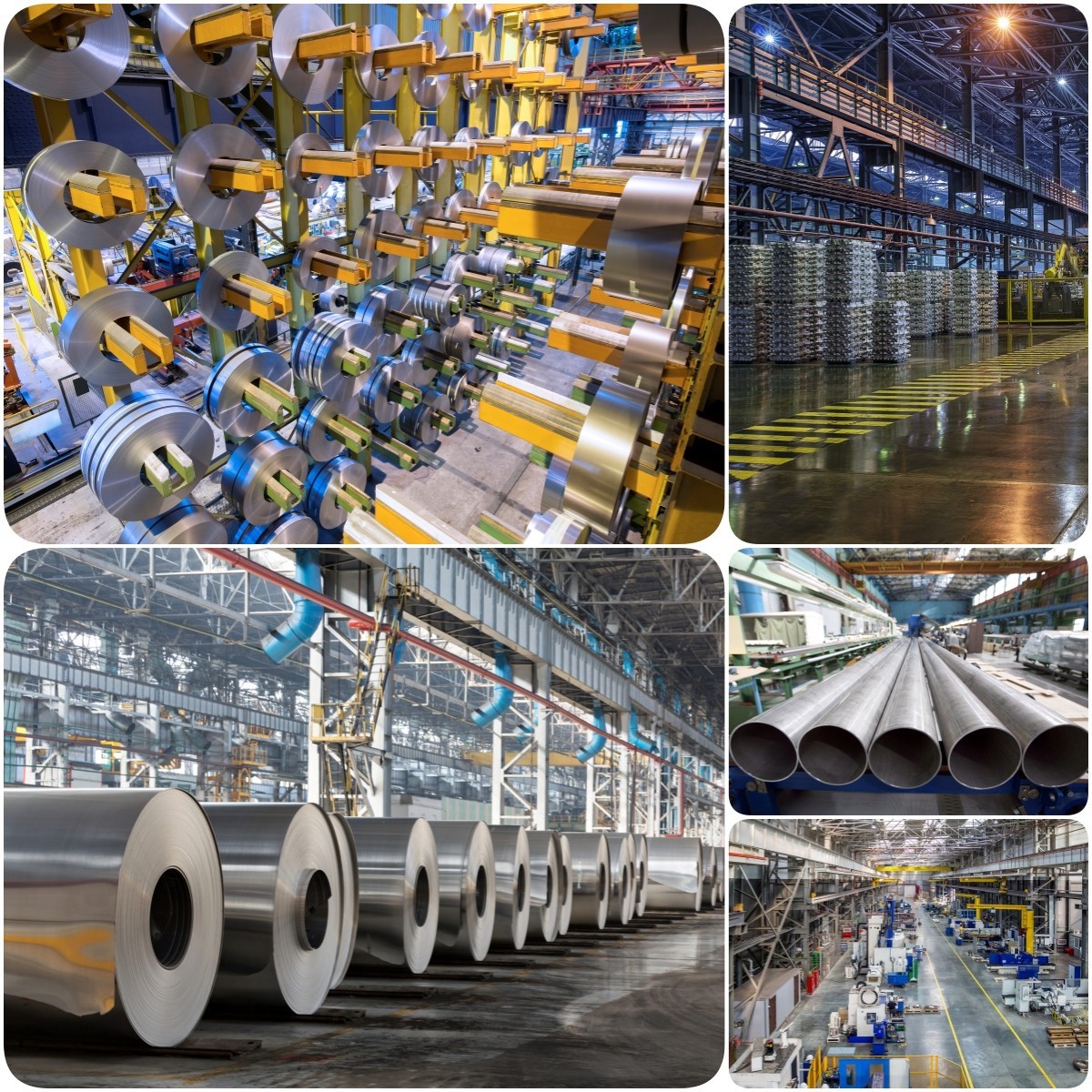
: Seamless and welded tubing in commercial and aerospace grades (Gr1, Gr2, Gr5, Gr7, Gr9, Gr12), suitable for heat exchangers, condenser tubes, and piping systems.
: Round bars, hex bars, and square bars in hot-rolled, forged, and cold-drawn conditions, available in various diameters and lengths.
: Plates, sheets, and strips in standard and custom dimensions, ideal for pressure vessels, chemical processing, and marine applications.
: Fine wire for welding, fasteners, and medical applications, alongside ultra-thin foil for specialized industrial uses.
: Custom-engineered components, fittings, flanges, fasteners, and intricate parts machined from titanium billets, bars, or plates with tight tolerances.
For quotes, technical specifications, or to discuss your project requirements for titanium tubes, bars, plates, sheets, wire, foil, or custom CNC machined components, please contact our team.